

Beruwala: A Historical Crossroads
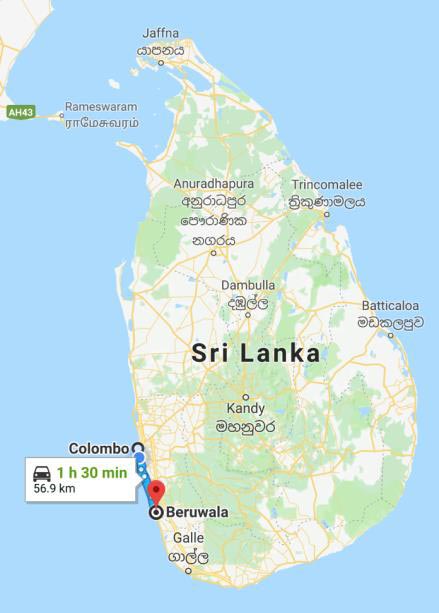
Beruwala marks the site of the first Muslim settlement in Sri Lanka, established by Somali Sheikh Yusuf bin Ahmad al-Kawneyn. The town's name is believed to be derived from the Arabic "Barbareen," meaning "the place where the sail is lowered." This rich history is reflected in its unique culture, where traditional attire like the sarong is common, and the local Tamil dialect is infused with Portuguese, Arabic, and Sinhalese words—a testament to its role as a historic trading port.
Beyond gems, Beruwala is a popular tourist destination famed for its long, golden beaches and warm tropical climate, offering diving, fishing, and luxury resorts.
Chinafort: The Epicenter of the Gem Universe
While Beruwala itself has no mines, Chinafort has evolved into the largest trading market in Sri Lanka for cut and polished gemstones. For generations, this neighborhood, dominated by Sri Lankan Muslims (Ceylon Moors), has been the crucial link connecting miners from across the island to international buyers from every corner of the globe.
Why Chinafort?
The expertise here is generational. Children grow up surrounded by gems, developing an innate, almost supernatural ability to identify a stone's type, approximate weight, and value with a single glance. This laser-sharpened intuition, combined with a deep-rooted culture of trust and integrity, forms the very capital of the market. Young traders often start with little money but are entrusted with valuable stones to learn the art of the trade.
The "Pathe" Gem Street: A Global Marketplace
The famous "Pathe" street is the vibrant core of Chinafort. Here's what makes it extraordinary:
- Unmatched Variety: Every type of gemstone imaginable is available—from Ceylon sapphires (blue, yellow, pink, padparadscha), rubies from Mozambique and Burma, and Mahenge spinels to Tanzanian tsavorites, Kashmir sapphires, and Brazilian tourmalines. If it exists, it can be found here.
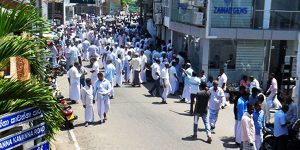
- A Safe & Open Market: Despite millions of dollars worth of gems being traded daily in the open street, it is renowned as one of the safest gem markets in the world. The community polices itself, and a person's reputation is their most valuable asset.
- Accessibility: The market is open to everyone—regardless of age, nationality, or experience. On any given day, you can see 16-year-old apprentices trading alongside 75-year-old veterans.
- Peak Trading Days: The market is busiest on Wednesdays and Saturdays, when international buyers flock in. The main street is closed to vehicles, creating a bustling, pedestrian-only bazaar of gems.
The Chinafort Ecosystem: From Mine to Market
The market's strength lies in its complete control over the value chain:
- Sourcing: Traders have deep, trusted relationships with miners across Sri Lanka (Ratnapura, Elahera, etc.) and travel the globe to source directly from mines in Madagascar, Tanzania, Kenya, and even conflict areas like Kashmir.
- Cutting & Polishing: Chinafort is a world-class center for lapidary arts. Master cutters and polishers, with skills passed down for centuries, can transform a rough stone into a brilliant masterpiece within a day. They possess proprietary knowledge on how to maximize color, brilliance, and carat weight.
- Testing & Certification: Over eight certified gemological laboratories (e.g., EGL, GIC, CGL) operate within the market, providing same-day, internationally recognized reports on authenticity, treatments, and origin. This gives buyers immense confidence.
- Global Reach: Chinafort traders are global citizens. They regularly attend major international jewelry shows in Hong Kong, Tucson, Bangkok, and Vicenza and have established distribution networks across the world, ensuring their stones reach the right collectors and jewelers.
A Culture of Risk and Reward
The gem trade here is not for the faint of heart. It involves:
- High-Stakes Rough Trading: Evaluating and purchasing rough stones requires immense experience to avoid losses and is akin to high-stakes gambling.
- Global Expeditions: Traders often spend months in remote, sometimes dangerous, mining areas across Africa and Asia, risking their health and capital to secure the finest stones.
- Artistic Cutting: A wrong cut can turn a valuable rough stone into a near-worthless piece. The cutters' skill directly determines the final value.
Conclusion: More Than a Market, A Legacy
The Chinafort "Pathe" Gem Market is a phenomenon. It is a unique fusion of ancient tradition and global commerce, built on an unshakeable foundation of trust, expertise, and a fearless entrepreneurial spirit. It is not just the commercial hub of Sri Lanka's gem industry; it is a testament to the country's enduring legacy as the Rathna Deepa, and the place where the world comes to find the most beautiful treasures the earth has to offer.
For anyone in the gem and jewelry trade, a visit to the "Pathe" market is not just a business trip—it is a pilgrimage.