

An Ancient Legacy of Gemology
Sri Lanka's gemological history is deeply woven into its cultural fabric. The ancient chronicle Mahavamsa provides evidence of a thriving gem trade dating back over 2,500 years. It mentions gem-encrusted thrones owned by a Naga king in 540 BC. Sri Lankan kings frequently used these natural treasures for diplomacy; as early as 250 BC, a king sent three kinds of gems and eight types of pearls to an Indian emperor as a gift to establish trade and relationships.
The island's fame spread far beyond its shores. A Roman naturalist recorded how an ambassador from "Tabrobane" (the name for Sri Lanka in the classical world) boasted of its fine gemstones during the reign of Emperor Claudius (AD 41-54). Over the centuries, famed explorers including the Greek astronomer Ptolemy (2nd century), Marco Polo (12th century), the Arab explorer Ibn Battuta (14th century), and the British sailor Robert Knox all made references to the abundance of sapphires, beryls, topaz, amethysts, and garnets they found on the island.
The City of Gems and a Stunning Variety
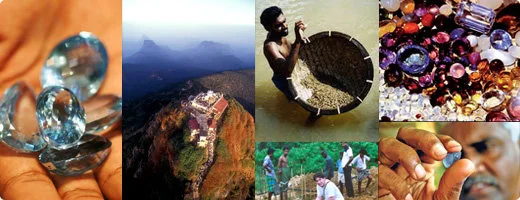
At the heart of this legacy is Ratnapura ("City of Gems" in Sinhalese). This region has been the epicenter of mining for centuries and is famous for producing an incredible variety of stones, many of exceptional quality compared to those from other regions. Ceylon's legendary output includes:
- Sapphires: Blue, Golden Yellow, Pink, Orange, and the rare Pinkish-Orange Padparadscha.
- Other Precious Stones: Rubies, Chrysoberyl (including Cat's Eyes), Alexandrite (the color-changing chrysoberyl), and Star Sapphires.
- Semi-Precious Stones: Garnets, Zircons, Tourmalines, and Spinels.
A Masterful Industry: Cutting and Polishing
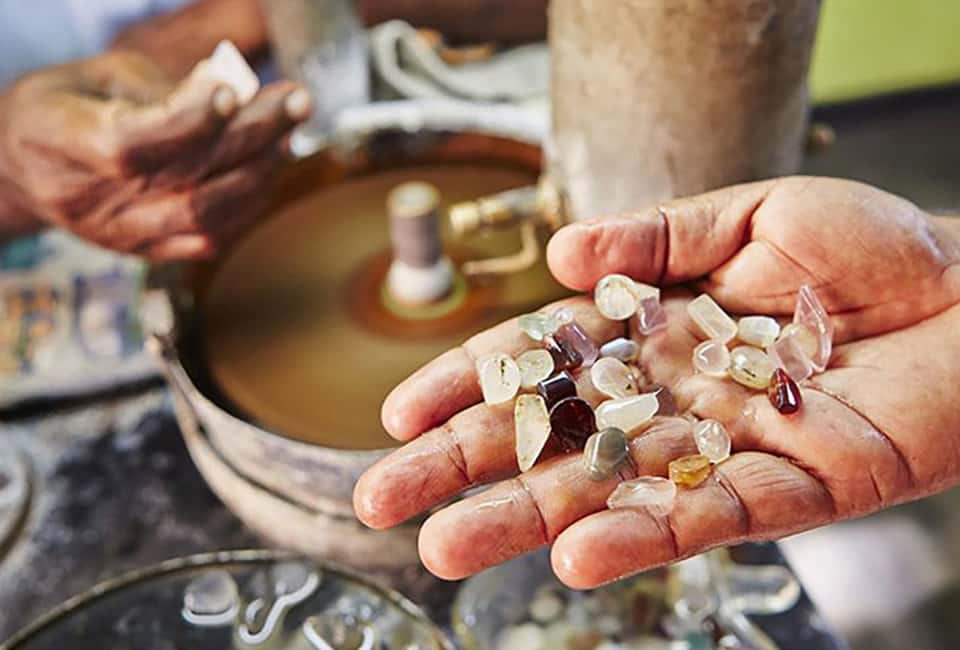
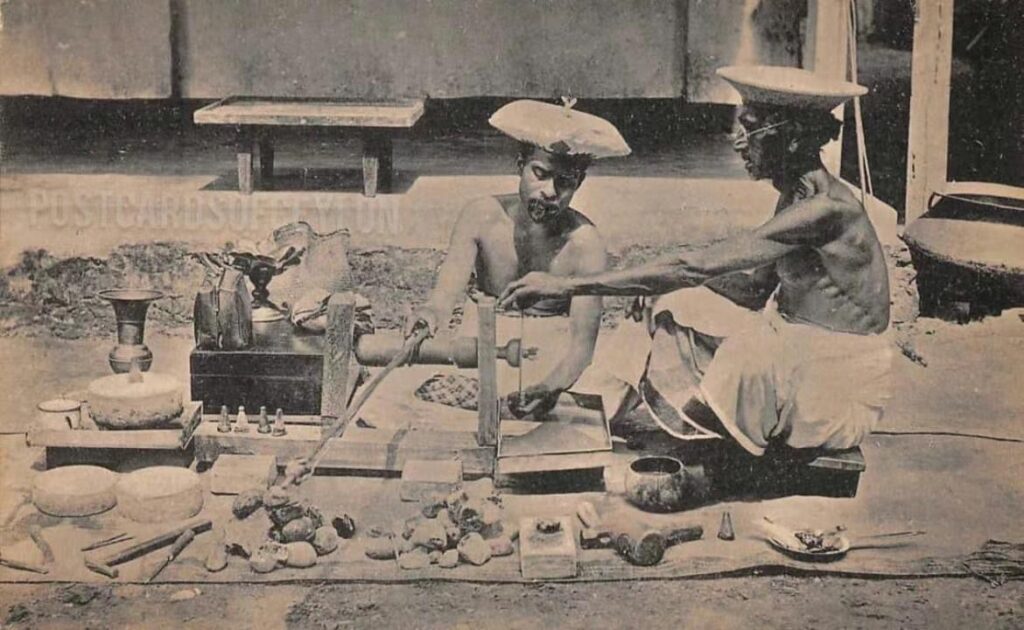
Sri Lanka's expertise extends far beyond mining. The island has nurtured a sophisticated industry of cutting and polishing for centuries. Evidence of early faceting machines shows a long history of craftsmanship. This deep, generational knowledge of how to best cut each type of gemstone to maximize its beauty is largely vested in the Ceylon Moors, descendants of Arab traders. Their historical role is attributed to their trading expertise, linguistic skills, and extensive travel networks, which were essential for the global gem trade.
A Land of Allure: Beyond Gemstones
Ceylon's allure has always extended beyond its gems. Its natural beauty, with lush rainforests like Sinharaja, warm beaches, and diverse wildlife, has attracted visitors for millennia. The island is rich with cultural and historical sites, such as Adam's Peak (a sacred pilgrimage site) and the ancient rock fortress of Sigiriya, a UNESCO World Heritage Site.
The island's natural resources are vast, including agricultural products like tea, rubber, and spices (cinnamon, cardamom, cloves), as well as minerals like graphite, limestone, and phosphates.
A History of Trade and Colonization
This abundance of gems and resources has always been a powerful magnet. Legends suggest early migrants, like Prince Vijaya and his followers from India in 543-505 BC, were drawn to the island's wealth.
Its strategic location made it a primary nautical corridor, attracting Arab, Moroccan, and Somali traders for spices and gems. European colonization began accidentally in 1505 when a storm drove Portuguese ships to the coast of Galle. What began as commerce soon turned to colonization, with the Portuguese (1505-1656), followed by the Dutch (1656-1796) and the British (1796-1948), each drawn by the island's riches. It is believed that during these periods, many gem deposits were systematically exploited and exported to Europe.
The Modern Rathna Deepa
Today, Sri Lanka continues its legacy as a gemological powerhouse. Since the end of its civil war in 2009, the country has shown exponential growth in services, industry, and agriculture. Regulations relating to mining and gem exports have been modernized, fostering growth and ensuring that the Jewel Box of the Indian Ocean continues to shine brightly, prospering from the ancient treasures beneath its soil.