

Nestled in the Indian Ocean, the island nation of Sri Lanka has been a legendary source of exquisite gemstones for over 2,500 years. Revered by kings, empires, and elites across the globe, its treasures have adorned crowns and jewelry boxes for millennia. Today, it continues its reign as the world’s premier source for the finest blue sapphires and the exquisite Padparadscha, rightfully earning its title as The Sapphire Capital.
A Land Blessed with Gemological Wealth
Sri Lankan gemstones are broadly classified into two categories: precious stones, known as Jazy (which includes sapphires), and semi-precious stones, or Vill Jazy. The island’s geological bounty primarily falls into five major mineral families:
- Corundum (Sapphire and Ruby)
- Chrysoberyl (including Cat’s Eye)
- Spinel
- Garnet
- Tourmaline
Among these, the Ceylon Sapphire stands supreme, renowned for its exceptional quality, variety, and brilliance.
The Allure of the Ceylon Sapphire
While “sapphire” typically brings to mind a stunning blue gem, the term refers to all corundum varieties except the red, which is known as ruby. Sri Lankan sapphires occur in a breathtaking spectrum of colors, each with its own unique quality disparities:
- Blue Sapphire: The classic and most sought-after variety.
- Fancy Sapphires: Including Pink, Purple, Violet, Lavender, Green, and Yellow.
- Padparadscha: The rarest and most beautiful of all, a captivating pinkish-orange gem that commands the highest price per carat in the colored stone world.
The Unmatched Strength of Corundum
A sapphire’s beauty is matched by its remarkable durability. Corundum is the second hardest naturally occurring mineral on Earth, right after diamond.
- Mohs Hardness Scale: Sapphires rank a 9 on the Mohs scale of mineral hardness, making them extremely resistant to scratches and ideal for everyday wear in jewelry. For context, diamond is a 10, and topaz is an 8.
| Mohs Hardness | Mineral | Absolute Hardness |
|---|---|---|
| 1 | Talc | 1 |
| 2 | Gypsum | 3 |
| 3 | Calcite | 9 |
| 4 | Fluorite | 21 |
| 5 | Apatite | 48 |
| 6 | Feldspar | 72 |
| 7 | Quartz | 100 |
| 8 | Topaz | 200 |
| 9 | Corundum (Sapphire) | 400 |
| 10 | Diamond | 1600 |
- Specific Gravity: With a specific gravity of 4, sapphires are denser than diamonds (3.52). This means a one-carat sapphire will be slightly smaller in size than a one-carat diamond, an important factor for gemologists and buyers to consider.
A Cutter’s Dream: The Question of Cleavage
Cleavage is the tendency of a crystal to split cleanly along defined internal planes. This is a critical factor for gem cutters and jewelers.
Sapphires have no distinct cleavage. This is one of their greatest assets:
- It allows cutters the freedom to shape the stone in various directions to maximize color, yield, and brilliance.
- It makes the stone significantly more durable during the setting process, as it is less likely to split from pressure or heat.
This absence of cleavage stands in contrast to minerals like diamond, which have perfect cleavage and require meticulous cutting transverse to these planes to avoid breakage.
A Legacy Carved in Stone
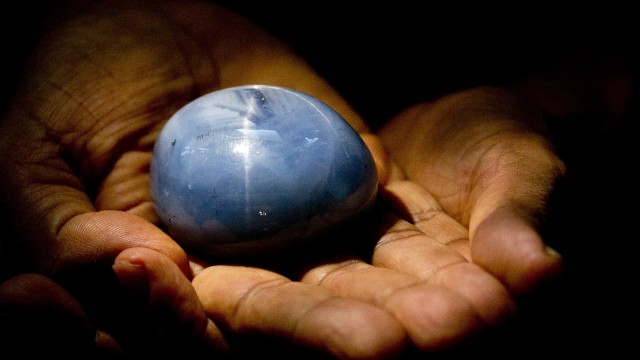
Sri Lanka’s gemological history is as rich and deep as the colors of its stones. For centuries, it has satisfied the most discerning clients from around the world. The island is not only famous for quality but also for size, having produced some of the largest sapphires ever discovered.
From the ancient gem pits of Ratnapura (“City of Gems”) to modern auction houses, the Ceylon Sapphire continues to captivate and enchant. It is a symbol of timeless beauty, unparalleled durability, and a heritage that positions Sri Lanka, truly, as the Sapphire Capital of the World.